

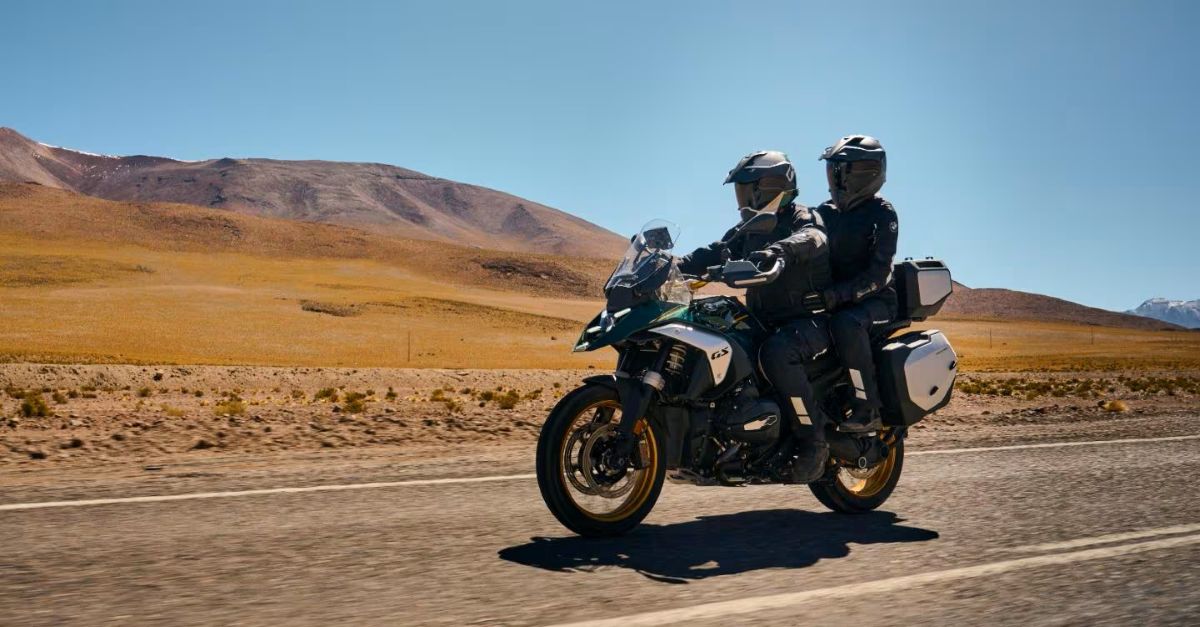
California has always had a complicated relationship with motorcycles. The weather is almost insultingly good for riding, the routes are legendary, and split-lane culture has been legal since 2017. But owning a premium bike here is a different conversation from riding one. It involves insurance brokers, smog compliance, depreciation curves, and lawyers.
What “Premium” Actually Means
Let’s be specific. A premium motorcycle in this context means anything in the $15,000–$40,000+ range at MSRP. That covers late-model Ducati Multistradas, BMW R 1300 GS, Harley-Davidson CVO series, Indian Pursuit, KTM 1290 Super Duke R, and the Triumph Speed Triple RS. Electric fits here too: Zero SR/F and LiveWire’s S2 Del Mar are now firmly in premium territory by price and positioning.
These aren’t starter bikes. The people buying them typically have years in the saddle and a very specific idea of what they want. They’re also buying into a cost structure that has very little in common with a $4,000 Honda CB500. Anyone seriously mapping out total cost of ownership (maintenance schedules, insurance tiers, registration fees) should also understand the legal landscape that comes with riding in this state. Platforms covering best personal injury law firms in California detail what riders actually face when something goes wrong, and in California traffic, that’s less a question of if than when.
Here’s where the numbers get real.
Depreciation: The Quiet Drain
Premium motorcycles depreciate. Fast. A new Ducati Panigale V4 loses somewhere between 15–20% of its value in the first year just from being registered and ridden. BMW and Harley hold value slightly better but the pattern is consistent.
Well. There are exceptions. Certain Ducatis from the early 2000s have become collector pieces. The 916, the 999. The original MV Agusta Brutale with the three-cylinder. But you’re not buying those new.
For a 2025/2026 model year bike, you’re looking at a 30–40% value drop over the first three years of ownership if you ride it with any regularity. That’s not a complaint, just math. Something worth factoring into the monthly mental accounting.
Insurance in California: Not a Small Number
California is a mandatory liability state. Minimum requirements are $15,000 per person / $30,000 per accident / $5,000 property damage. For a premium bike, the minimum makes no practical sense — the bike itself costs three times the property damage minimum.
Comprehensive and collision coverage on a $20,000 motorcycle in Los Angeles or the Bay Area will typically run $1,200–$2,500 annually, depending on rider history, zip code, and the specific model. Some sport bikes (particularly anything with “R” at the end and a 0-60 under three seconds) push that number higher.
Split-lane riding, legal under CVC 21658.1 since 2017, hasn’t exactly made insurers more relaxed. Insurers price California motorcycle policies with the full understanding that riders here operate in denser, faster, more unpredictable traffic conditions than most states. The 2016 case involving a lane-splitting rider on the 101 that went through two years of litigation before settlement — not naming names, but the insurance industry paid attention.
Worth noting: if you add aftermarket parts and don’t inform your insurer, you may have a coverage problem when you actually need to file a claim. This is not a theoretical risk.
Registration, Smog, and the CARB Factor
California Air Resources Board has been tightening emissions standards for years. As of 2026, any new on-road motorcycle sold in California must meet CARB-specific emission standards — stricter than federal EPA requirements. Most major manufacturers now build CARB-compliant versions of their premium models specifically for the California market.
The practical consequence: some models sold in 48 other states are not available in California. Or they arrive with different tuning. KTM and Ducati both have model variants that differ between California-spec and non-California-spec. If you’re cross-shopping a bike you rode in Nevada at a dealer show, double-check that the California version performs identically. Sometimes it does. Sometimes it really doesn’t.
Annual registration for a premium motorcycle in California runs $150–$400+ depending on the vehicle’s value and the biennial smog requirements. Not a budget-breaker, but it’s not zero either.
Maintenance: The Part Dealers Don’t Emphasize
A Ducati Panigale has valve checks every 15,000 miles. At an authorized dealer, and the boxer engine is actually accessible without removing the engine from the frame. Small thing. Significant when you’re looking at a $600 service bill vs. a $1,100 one.
Tires on a premium sport or adventure bike: $400–$700 per set installed, every 5,000–8,000 miles depending on how you ride. Track days destroy rear tires in a session. Commuting through San Francisco is easier on rubber than canyon carving on Mulholland, but neither is cheap.
Chain drive bikes need chain and sprocket replacements every 15,000–25,000 miles — $200–$500 depending on spec. Shaft drive (BMW, some Harleys) eliminates that cost entirely. Worth considering if you’re putting on serious miles.
Brake pads. Brake fluid flushes. Fork seal replacements if you ride aggressively. It adds up. A reasonable maintenance budget for a premium motorcycle ridden 6,000–8,000 miles per year in California is $1,500–$2,500 annually, not counting tires.
Gear and the Cost of Actually Being Protected
Gear is part of the cost of ownership. Anyone arguing otherwise is either very lucky or hasn’t had a close call yet.
A quality helmet (AGV, Shoei, Arai, Schuberth) runs $600–$1,500. It should be replaced every five years, or after any impact. Jacket with real CE Level 2 armor: $400–$900. Gloves, boots, pants — another $600–$1,000 if you’re buying properly. You’re looking at $1,500–$4,000 upfront for a full kit that will actually protect you.
California’s helmet law (CVC 27803) requires DOT-certified helmets for all riders. No exceptions. The law has been challenged and upheld multiple times. More importantly, in the event of an accident, helmet use affects both medical outcomes and legal proceedings in ways that matter enormously.
The Legal Layer: California-Specific Realities
California operates under a pure comparative fault system. If you’re in an accident and found 30% at fault, your compensation is reduced by 30%. Simple in theory. Complex when you’re the one in a hospital bed and the other party’s insurer is arguing about your speed or lane position.
Lane splitting adds a layer. Courts have generally held that legal lane splitting doesn’t automatically assign fault to the motorcyclist — but “legal” lane splitting has conditions. Operating at reasonable speed relative to traffic. Not lane-splitting in unsafe conditions. Each case is factual. Each case is argued differently.
The 2019 San Jose case — where a driver suddenly changed lanes into a lane-splitting motorcyclist and the resulting litigation turned on dashcam footage that only the motorcyclist had — became something of a cautionary tale cited by rider advocacy groups. Document everything you can. Front and rear cameras. It’s a $200–$400 investment that has changed case outcomes.
Uninsured motorist coverage matters here. California has one of the higher rates of uninsured drivers in the country. If an uninsured driver hits you, you’re dealing with your own insurer. Having UM/UIM coverage on your motorcycle policy isn’t optional if you care about being made whole.
Electric Premium: The 2026 Consideration
Zero and LiveWire have both pushed hard in California. The state offers significant purchase incentives — $1,500 MSRP reduction through the Clean Vehicle Rebate Project for qualifying electric motorcycles. Some counties add additional rebates.
Operating costs drop substantially: charging instead of fuel saves $1,500–$2,500 annually for regular commuters, depending on mileage and electricity rates. Maintenance drops even further — no oil changes, no chain, no valve adjustments.
The catch: range anxiety on touring routes. The LiveWire S2 Del Mar does about 100 miles in real-world mixed riding. For a Pacific Coast Highway run you’re planning charging stops. The charging infrastructure along PCH in 2026 is better than it was in 2022. It’s not Tesla Supercharger coverage. Know the difference before you commit.
The Bottom Line
Owning a premium motorcycle in California in 2026 costs more than it looks on the sticker. Insurance, maintenance, gear, registration, depreciation — you’re looking at $5,000–$9,000 per year in total cost of ownership above the purchase price for a $20,000–$30,000 bike, even before any incident or repair.
Is that too much? Depends entirely on what you’re comparing it to. A second car in the Bay Area costs more. A lease on something German costs more. And it doesn’t get you on Mulholland at 7am on a Tuesday when the road is dry and empty.
But go in with clear numbers, the right insurance coverage, a reasonable gear budget, and some basic understanding of California’s legal framework for riders. The people who end up in the worst situations are almost always the ones who skipped one of those boxes.