

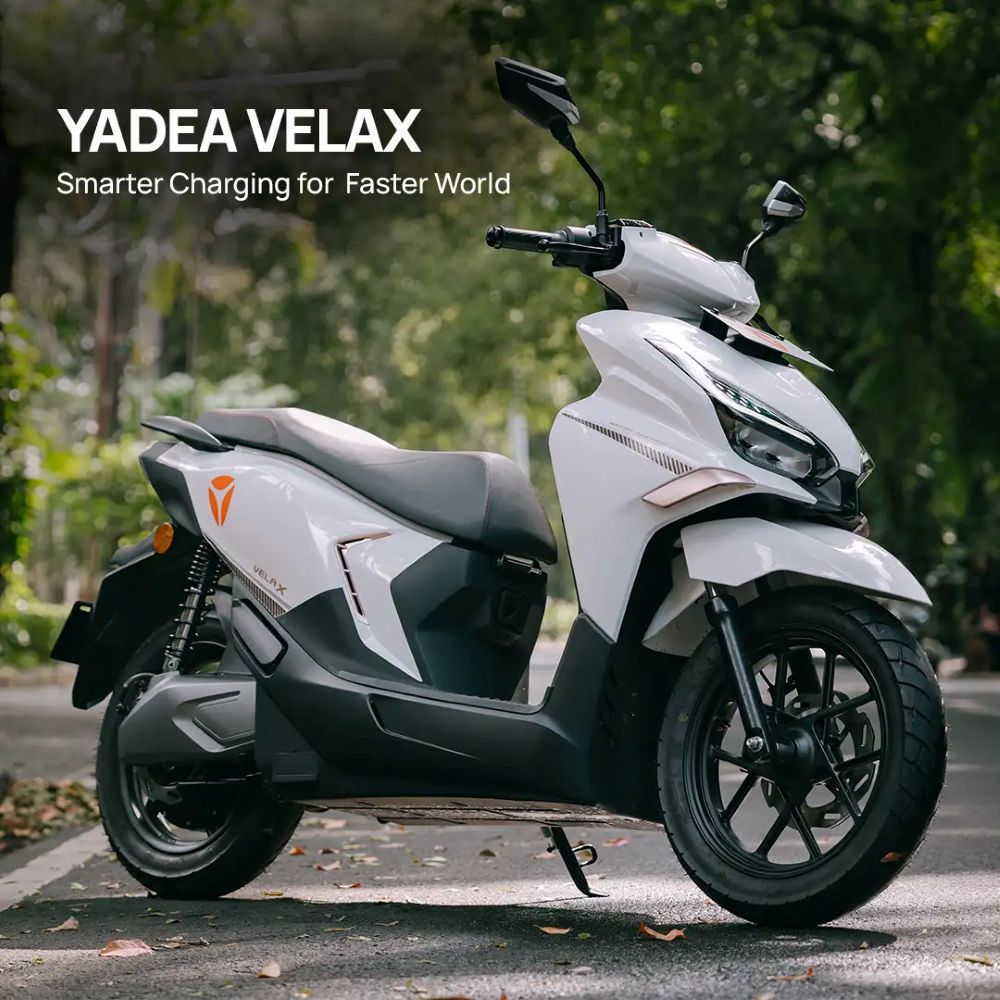
Pakistan’s electric two-wheeler market is exploding, fueled by government incentives, soaring fuel prices, and long-suppressed consumer demand. After years of limited ICE choices, EV adoption is accelerating at one of the fastest rates globally, with sales up 212% year-to-date in 2026.
Electric Vehicles Market: Trends and Performance
Pakistan’s electric two-wheeler market, still in its infancy, is experiencing explosive growth, driven by a unique combination of structural, political, and economic factors.
For decades, consumers had access to only a limited range of internal combustion engine (ICE) motorcycles, primarily 70cc to 150cc commuter models produced locally. At the same time, high import duties effectively shielded the domestic market from international competition, restricting both product diversity and technological innovation.
The turning point came when the government launched a national strategy aimed at reducing CO₂ emissions and accelerating the transition toward electric mobility. Incentives for both manufacturers and consumers quickly stimulated investment, attracting a growing number of EV brands and significantly expanding product availability, particularly in the scooter segment.
Momentum accelerated further in February 2026 with the introduction of the Pakistan Accelerated Vehicle Electrification (PAVE) program. The scheme provides a subsidy covering up to 20% of the purchase price of eligible electric motorcycles and auto-rickshaws, while offering interest-free financing for the remaining balance.
The impact was immediate. Considering that a typical electric two-wheeler costs around 250,000 Pakistani rupees, compared with approximately 160,000 rupees for the country’s best-selling motorcycle, the Honda CD70, affordability has historically been a major barrier to adoption. The PAVE initiative directly addressed this issue, generating more than 270,000 applications within just a few days of launch.
Additional momentum came from the sharp increase in fuel prices following the escalation of tensions in the Middle East and the conflict involving Iran. Higher operating costs for conventional vehicles have significantly strengthened the economic case for electric mobility, making EVs increasingly attractive not only from an environmental perspective but also in terms of total cost of ownership.
Demand is now growing so rapidly that several EV dealerships reportedly ran out of inventory in April despite continuous supply expansion.
Following an already exceptional first quarter, when sales increased 141.7%, April registrations surged an extraordinary 322% year-on-year. By the end of May, electric two-wheeler registrations had reached 125,511 units, already approaching the total volume achieved during the entire previous year. Cumulative growth stood at an impressive 212.4%.
Pakistan is rapidly emerging as one of the world’s most dynamic electric two-wheeler markets and may soon become a benchmark case for EV adoption across emerging economies. The combination of supportive government policies, favorable economics, and rising consumer acceptance suggests that the country is entering a new phase in the evolution of its mobility sector.
Electric Vehicles Development and Plans
The government has just officially opened the registration process for the Pakistan Accelerated Vehicle Electrification (PAVE) scheme, a major initiative to electrify the country’s transport sector.
Introduced as part of the New Energy Vehicle (NEV) Policy 2025-2030, the scheme is designed to make electric mobility affordable for ordinary Pakistanis, starting with two-wheelers.
For the first time, consumers can apply directly for subsidies and incentives through a dedicated online portal (https://pave.gov.pk/login), a move widely seen as a way to reduce the bureaucratic barriers that slowed earlier green programmes. The PAVE scheme primarily targets electric motorcycles and small vehicles, aiming to make low-emission mobility financially accessible to a broad segment of the population.
This initiative is expected to further accelerate the electric two-wheeler market, which has already grown rapidly following the introduction of Pakistan’s first effective EV support policy in 2023.
PAVE forms a core pillar of the Pakistan EV Plan 2025–2030, which is designed to provide sustained momentum to the green mobility transition. A key shift in the new plan is the recognition that subsidies alone are insufficient: the long-term success of EV adoption in Pakistan will depend on parallel investments in infrastructure development and financial incentives.
Given the country’s heavy reliance on fossil fuels for electricity generation, electrification must progress alongside the expansion of renewable energy—particularly solar power. Investments in charging infrastructure and local manufacturing capacity will be critical to improving affordability and availability. In addition, newly introduced policies supporting carbon credit trading could attract international funding, further accelerating the transition to sustainable mobility.