

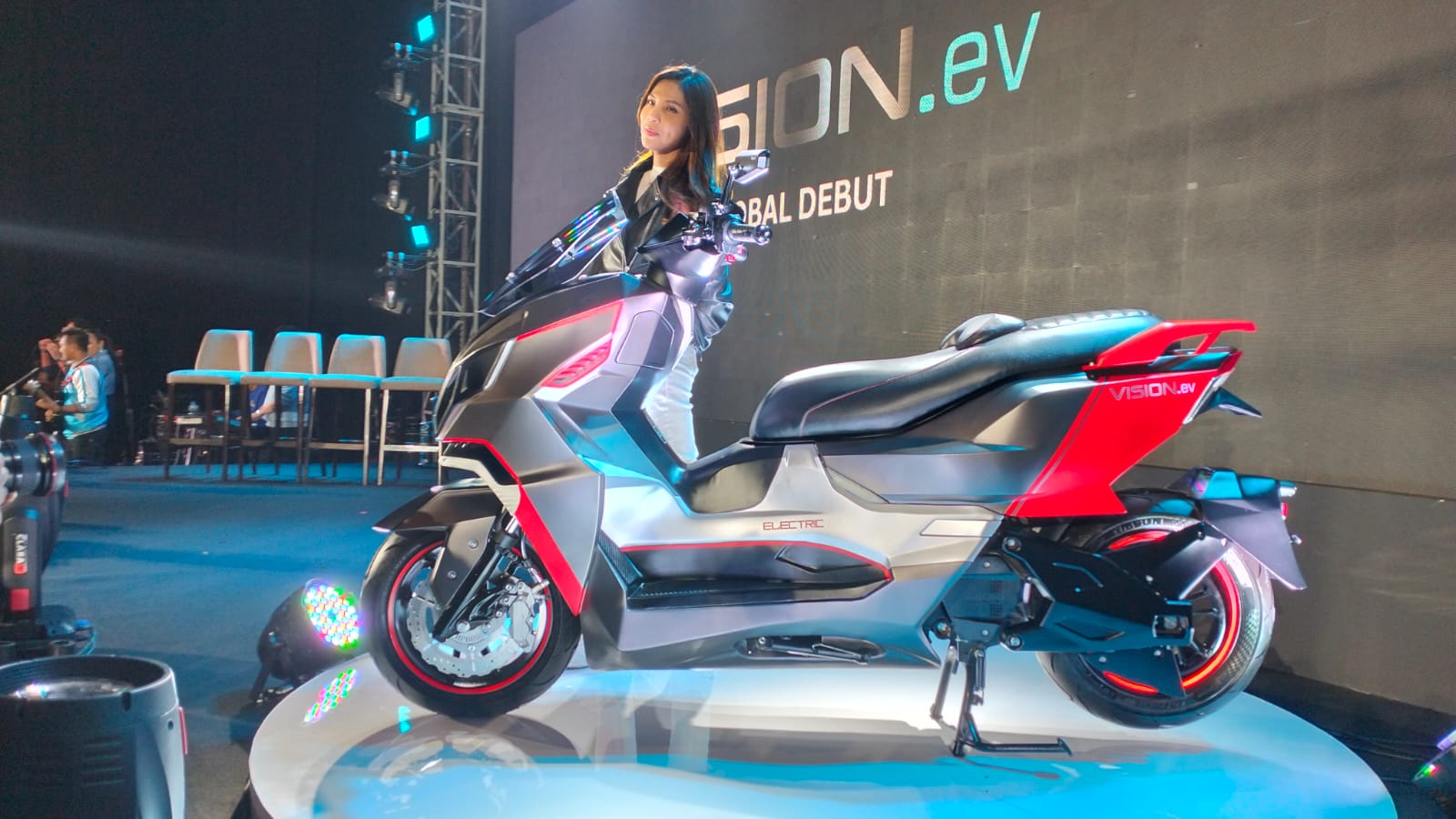
Indonesia’s Electric Motorcycle Market killed in its infancy by government policy reversals. The abrupt withdrawal and repeated delays of EV incentives in Indonesia have stalled market growth, caused financial losses for manufacturers, and weakened trust in the government’s electrification strategy.
Indonesian Market Context
Indonesia remains one of the world’s most strategically important two-wheeler markets. According to the United Nations World Urbanisation Prospects 2025, the Jakarta metropolitan area is now the largest urban agglomeration globally, with nearly 42 million inhabitants. Against this backdrop, two-wheelers continue to represent the backbone of daily mobility for a population exceeding 281 million people.
In 2025, new motorcycle registrations surpassed 6.5 million units, reinforcing Indonesia’s position as the world’s third-largest two-wheeler market. However, electrification remains marginal: approximately 99.5% of registrations were still powered by internal combustion engines (ICE). The country’s vehicle parc is not only overwhelmingly ICE-based but also relatively old, contributing significantly to urban air pollution, fuel consumption, and CO₂ emissions.
Policy Reversal and Market Impact
Given the scale of Indonesia’s motorcycle fleet and its environmental implications, a coherent electrification strategy should be a cornerstone of national transport and climate policy.
The previous administration appeared to recognize this challenge in late 2023, introducing incentives aimed at accelerating EV adoption, supporting manufacturers in achieving economies of scale, and narrowing the price gap between electric and conventional motorcycles.
However, following the October 2024 elections, the policy framework shifted dramatically.
Despite repeated assurances that incentives would remain in place, all subsidies were abruptly suspended in January 2025. Authorities subsequently announced that the programme was under review and would be replaced by a revised scheme, initially scheduled for August 2025 and later postponed to October. Neither commitment was fulfilled, and as of today no replacement programme has been implemented.
The result has been a prolonged period of uncertainty that has significantly disrupted the market. EV manufacturers, particularly startups and newer entrants, have faced slowing demand, weakened investment visibility, and mounting financial pressure. Consumers, meanwhile, have received conflicting signals regarding the government’s long-term commitment to electrification.
From Industrial Strategy to Credibility Challenge
The original programme provided a direct subsidy of IDR 7 million for the purchase of an electric motorcycle, substantially improving affordability in a highly price-sensitive market.
The proposed replacement mechanism was designed around a Government-Borne Value Added Tax (PPN DTP) incentive, offering discounts of 6% or 12% depending on local content requirements (TKDN) and battery specifications. The policy objective was strategically sound: encourage domestic manufacturing, reduce dependence on imports, and support the development of a local EV supply chain.
However, the absence of implementation has overshadowed the policy’s industrial rationale.
What was initially presented as a transition toward a more sophisticated and locally focused incentive framework has instead evolved into a broader credibility issue. Repeated announcements without execution have undermined investor confidence and raised questions about the predictability of Indonesia’s regulatory environment.
Strategic Implications
Indonesia possesses many of the structural advantages required to become one of the world’s leading electric two-wheeler markets: a massive domestic market, severe urban congestion, growing environmental pressures, and a strong industrial base.
Yet the events of 2025 demonstrate that market potential alone is insufficient. Successful electrification requires policy consistency, regulatory predictability, and clear long-term signals to both manufacturers and consumers.
Without a credible and stable incentive framework, Indonesia risks slowing the development of its domestic EV ecosystem, delaying emissions reductions, and ceding momentum to competing markets across Asia that are moving more decisively toward electric mobility.
Key Takeaway
Indonesia’s EV challenge is no longer primarily technological or industrial—it is increasingly a matter of policy credibility. The suspension of incentives and repeated delays in launching a replacement scheme have weakened confidence across the value chain, turning what should have been a flagship electrification programme into a test of the government’s ability to deliver on its own strategic commitments.