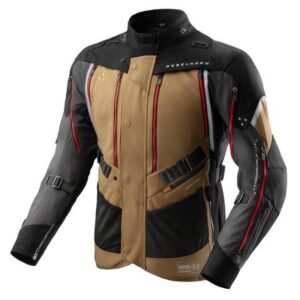


The basic rule is simple: if you’re planning a long-distance trip, don’t buy a gear set selected mainly for its looks. Choose equipment that offers proper certification, real ventilation, and solutions tested in rain, heat, and on highways. In touring, technology, safety, and functionality matter most. Where can you find them? Below are practical tips to help you make the right decision. In touring, the weather can change faster than your route plan. That’s why motorcycle gear should be layered and certified. Look for models with a removable or integrated membrane and an efficient ventilation system. Pay attention to specific parameters:
How to select motorcycle riding gear for changing conditions?
- CE certification compliant with EN 17092 (AA or AAA level) – this European standard defines abrasion resistance, tear strength, and impact protection of motorcycle clothing. In touring, where higher speeds are common, at least AA level is recommended.
- Level 2 protectors – shoulders, elbows, knees, and hips. The more advanced the protection, the more confident you’ll feel on the road.
- Ventilation panels with real airflow – not decorative zippers, but functional systems that actually work.
- Removable motorcycle rain gear – rain doesn’t end a trip; sometimes it’s simply part of it. With the right equipment, there’s no need to fear it.
- Adjustment systems – proper fit to your body shape and thermal layers significantly improves riding comfort.
A reputable manufacturer designs protective motorcycle clothing to perform on the road, not just in a catalog. The touring segment is built for riders who cover 10,000–20,000 km per year and understand that membrane performance, ventilation, and ergonomics are the foundation—not an extra feature.
What motorcycle equipment is essential for long-distance trips?
On extended journeys in variable weather conditions, every detail matters. It’s not just about a jacket and pants but about a well-thought-out motorcycle equipment: gloves, boots, thermal layers, and systems that improve overall comfort.
Experience shows that a minimum touring setup should include:
- A textile jacket and pants with a removable membrane.
- Touring gloves – ideally two pairs (summer + waterproof).
- Boots with a membrane and ankle reinforcement – providing both walking comfort and protection.
- A thermal base layer – allowing quick adaptation to changing temperatures.
- Additional motorcycle rain gear.
In the touring segment, it’s worth paying attention to manufacturers offering mix & match systems and full CE certification – Rebelhorn is one example. You can match elements to your riding style, whether you combine city riding with weekend trips or prefer disappearing for several days and returning with +1500 kilometers on the odometer. Rebelhorn offers a practical assurance that your gear will withstand 8 hours in the saddle and won’t fail in demanding conditions.
How to match motorcycle protective gear to your riding style?
A common mistake among less experienced riders is buying with their eyes – choosing gear that looks impressive rather than performs well. A conscious rider does research, checks size charts, and analyzes technical specifications. A good manufacturer responds with precise descriptions, real measurements, and full transparency, while also paying attention to details such as:
- Abrasion-resistant outer materials.
- Stretch zones that improve comfort during long hours in a seated position.
- Functional adjustment and ventilation systems.
- The ability to connect the jacket and pants.
- Anatomically tailored women’s designs if selecting gear for a female rider.
Professionally designed protective motorcycle clothing should look good, but above all, it must protect. If you’re planning a 5-day trip to the Alps, where temperatures can be 8°C in the morning and 28°C in the afternoon; layering stops being an option and becomes a necessity.