
United States Motorcycles lost over 5% in 2025. Following the previous year lost, sales fell again reaching 507,311 units, down 5.3%. While the electric segment expanded by 6.6%, it remains largely insignificant in terms of overall market volumes.
The U.S. Economy: Adjustment Amid Unusual Crosscurrents
The U.S. economy is neither overheating nor stalling — it is adjusting. That adjustment is taking place against an unusually intense set of crosscurrents. The cost of trading with the United States rose sharply in 2025, as the average tariff rate increased from roughly 2.5% to around 16.5%, while the trade outlook remains highly uncertain. Net migration has collapsed from more than 2 million people annually to nearly zero, with a non-negligible risk of negative net migration in 2026.
At the same time, AI-driven investment has surged, lifting capital expenditure, software spending, and R&D. These investments are already delivering early productivity gains at the firm level, alongside increasingly concentrated equity-market performance.
Despite the One Big Beautiful Bill Act (OBBBA) and larger tax refunds — which should provide a modest fiscal tailwind in the first half of the year — current consumer strength remains heavily reliant on higher-income households, greater comfort with borrowing, and continued drawdowns of accumulated savings.
Motorcycle Industry: Trends and Outlook
The U.S. two-wheeler market is the 14th largest in the world and among the most stable, with annual volumes hovering around half a million units for more than a decade.
Following a 5% decline in the previous year, motorcycle sales fell again in 2025, reaching 507,311 units, down 5.3%. While the electric segment expanded by 6.6%, it remains largely insignificant in terms of overall market volumes.
Market Leaders and Competitive Performance
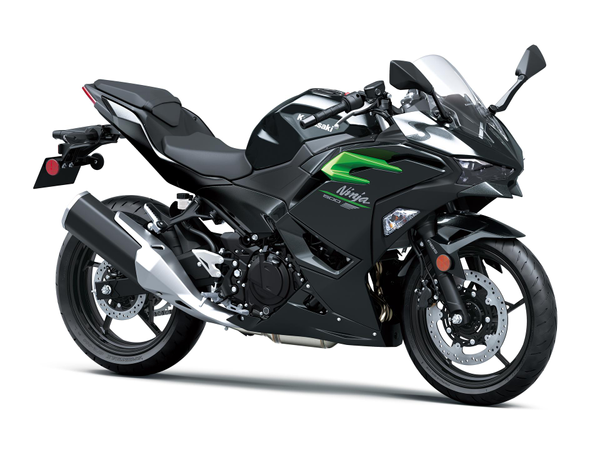
The competitive landscape saw an intense battle for market leadership, with Kawasaki challenging Honda for much of the year. Ultimately, Honda retained the top position by year-end with a margin of fewer than 1,000 units, despite a 12.1% decline in sales, while Kawasaki recorded a robust 12.7% increase.
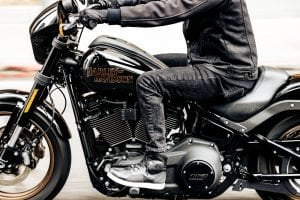
The apparent casualty of the current economic environment is — and is likely to remain — the American icon Harley-Davidson. Now in third place, the company posted a 12.9% decline, reflecting its exposure to discretionary spending pressures and a shifting consumer base.
KTM ranked fourth with a sharp 25.4% drop, followed by Suzuki in fifth place (-15.6%) and BMW in sixth (-12.4%). Indian Motorcycles posted a modest 1.0% gain, securing eighth position, just ahead of Triumph (-6.4%) and a rapidly expanding CF Moto, whose sales surged by 153.9%.
Paradoxically, it appears that the tariff regime introduced under the Trump administration may be creating unintended incentives for Chinese motorcycle manufacturers to expand their presence in the U.S. market.