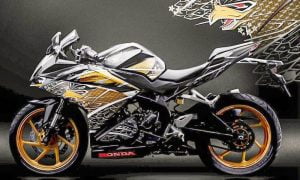

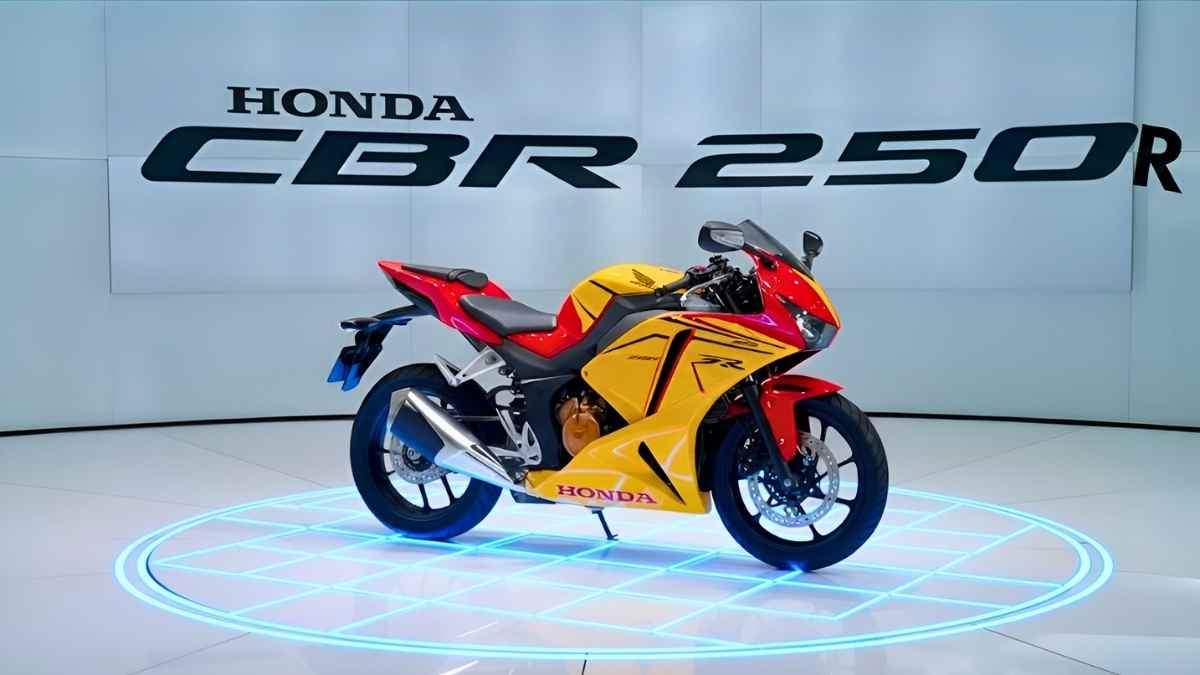
Indonesia’s motorcycle market has lost momentum. After a modest +2.1% increase in 2024, growth slowed further to just 0.6% in 2025, with volumes reaching approximately 6.55 million units, still well below the 8 million-unit peak of the previous decade.
Macroeconomic Context
Economic prospects for the next three years are strong.
Indonesia’s real GDP growth is expected to average 5.1%, supported by resilient consumer spending and increased public investment. However, the outlook for 2025 is exposed to several downside risks, including potential disruptions to exports stemming from global trade fragmentation, a slowdown in China—Indonesia’s main trading partner—and the risk of higher US tariffs.
Economic growth is projected to strengthen in the fourth quarter, driven by year-end consumption and accelerated government spending. Nevertheless, achieving the government’s full-year growth target of 5.2% remains challenging. According to official estimates, GDP would need to expand by approximately 5.4% in Q4 to meet the target, following growth rates of 4.8% in Q1, 5.12% in Q2, and 5.04% in Q3.
Interest rate cuts by Bank Indonesia, alongside various fiscal stimulus measures, are expected to provide additional support. Even so, macroeconomic momentum remains fragile and vulnerable to external shocks.
Motorcycle Industry: Trends and Outlook
Indonesia’s motorcycle industry—the third largest in the world—plays a central role in the country’s industrial ecosystem and represents by far the dominant form of individual mobility, with volumes nearly six times larger than the passenger car market.
Following the sharp rebound after the Covid-related production shutdowns in 2020 (with around 90% of motorcycles produced locally), market growth has lost momentum. After a modest +2.1% increase in 2024, the market expanded by just 0.6% in 2025, reaching approximately 6.55 million units—still well below the 8 million-unit peak recorded in the previous decade.
As reported separately, electric motorcycle manufacturers are operating in an increasingly uncertain policy environment. Government incentives introduced in mid-2023 expired in December 2024 and were repeatedly postponed for renewal throughout 2025. Authorities ultimately announced that no new EV incentives will be introduced, creating a highly unstable framework for investment and market development.
Yadea Strategic Investment
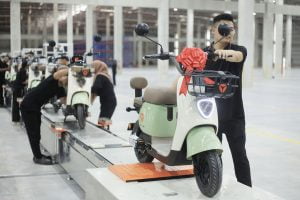
Despite this policy uncertainty, Chinese EV giant Yadea announced a major investment to manufacture electric scooters and motorcycles in Indonesia. The inaugural vehicle delivery ceremony, held on March 14, 2024, in Cikarang, Bekasi, marked a significant milestone in Yadea’s expansion strategy in Southeast Asia.
Located in Bekasi, West Java, the Yadea Indonesia production base covers 28,000 square meters, featuring state-of-the-art facilities and advanced manufacturing technologies, with an annual production capacity of 300,000 units. This investment underscores Indonesia’s long-term strategic importance for global EV players, even as short-term policy uncertainty continues to weigh on the domestic electric two-wheeler market.