

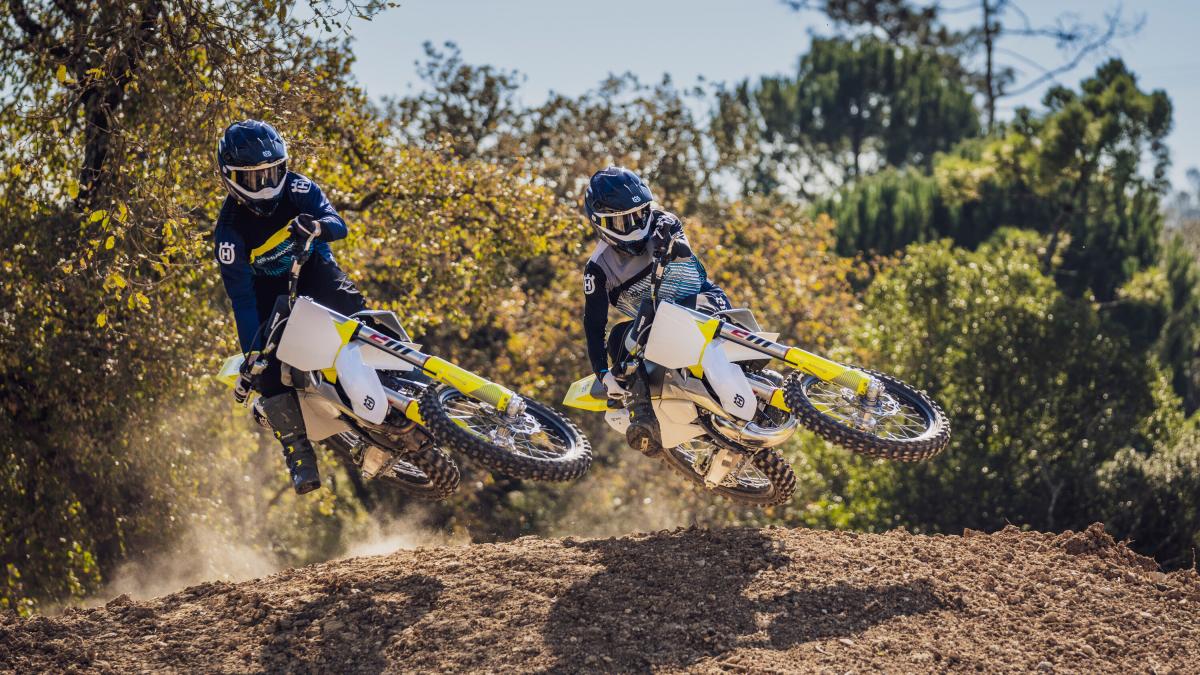
Husqvarna Motorcycles has an harsh 2026 ahead. Affected by the financial crisis at Pierer Mobility, Husqvarna’s sales fell by 38.8% in 2025 to 30,297 units, after having reached an all-time record the previous year.
McD tracks new vehicle registrations across 97+ countries worldwide, reporting data based on the calendar year. When comparing the data reported by us to that declared by manufacturers, it’s important to note that manufacturers typically report their “sales” (vehicles invoiced), which often differ from “registrations” due to variations in their fiscal year reporting.
Husqvarna Global Sales Performance
Reborn in 2014 following the acquisition by Pierer Mobility/KTM, the Swedish brand—boasting more than a century of history—delivered double-digit growth almost every year until 2021. This trajectory changed after the KTM Group acquired the Spanish off-road specialist GasGas, which competes directly with Husqvarna in several key segments. From that point, growth stalled and ultimately turned into a sharp decline, culminating in a collapse in 2025.
Affected by the financial crisis at Pierer Mobility, Husqvarna’s sales fell by 38.8% in 2025 to 30,297 units, after having reached an all-time record the previous year. The downturn was global, with Europe down 48.4%, North America down 24.7%, and the Pacific region down 14.6%. Emerging markets were hit even harder: sales declined by 78.3% in India and by 67.3% across ASEAN countries.
This dramatic performance was largely driven by severe cash constraints, which resulted in prolonged production shutdowns and an inability to adequately supply the market.
2026 Company Goals
Following Bajaj Auto’s takeover of control of the group, the situation has stabilised somewhat, but the crisis is far from resolved. 2026 is expected to remain a very challenging year for the Husqvarna organisation.
The relaunch of the KTM Group still lacks a clear, brand-specific strategy, leaving Husqvarna’s long-term positioning uncertain. No meaningful updates to the product lineup are planned for 2026, which will further weaken competitiveness. While the off-road racing strategy remains in place, budget cuts are widespread across the organisation.
At the same time, the global dealer network continues to suffer from limited factory support. Large stocks of 2024 model-year bikes remain in inventory, while availability of more recently produced models is constrained, adding further pressure on sales and dealer confidence.
Husqvarna Heritage
Husqvarna was founded in 1689 in the small town of Huskvarna in southern Sweden, now the city of Huskvarna, Småland province. Husqvarna was originally a mechanical company, producing guns for the Swedish army. In 1903, the company entered the motorcycle industry with its first product, the Husky.
Husqvarna was acquired by Italian motorcycle company Cagiva in 1987 and became part of parent company MV Agusta Motor. A group of managers and engineers in Husqvarna were unhappy with the future under Cagiva. They founded Husaberg AG, a new motorcycle manufacturer in Sweden and later acquired by KTM AG.
In 2007, the two-wheeler division BMW Motorrad acquired Husqvarna in a deal worth €93 million. But in 2013, the Swedish motorcycle company changed hands again when Pierer Industrie AG bought all shares of the company from BMW Motorrad.
In 2013, the shares and patent rights of the Husqvarna brand were sold by Pierer Industrie AG to KTM AG, Husqvarna Motorcycle GmbH has since been established.
Husqvarna, once owned by KTM, returned to business in 2014 by presenting the Supermoto 701 locust at the EICMA show. The company currently has many products, mainly focusing on two segments of locusts and naked bikes.