

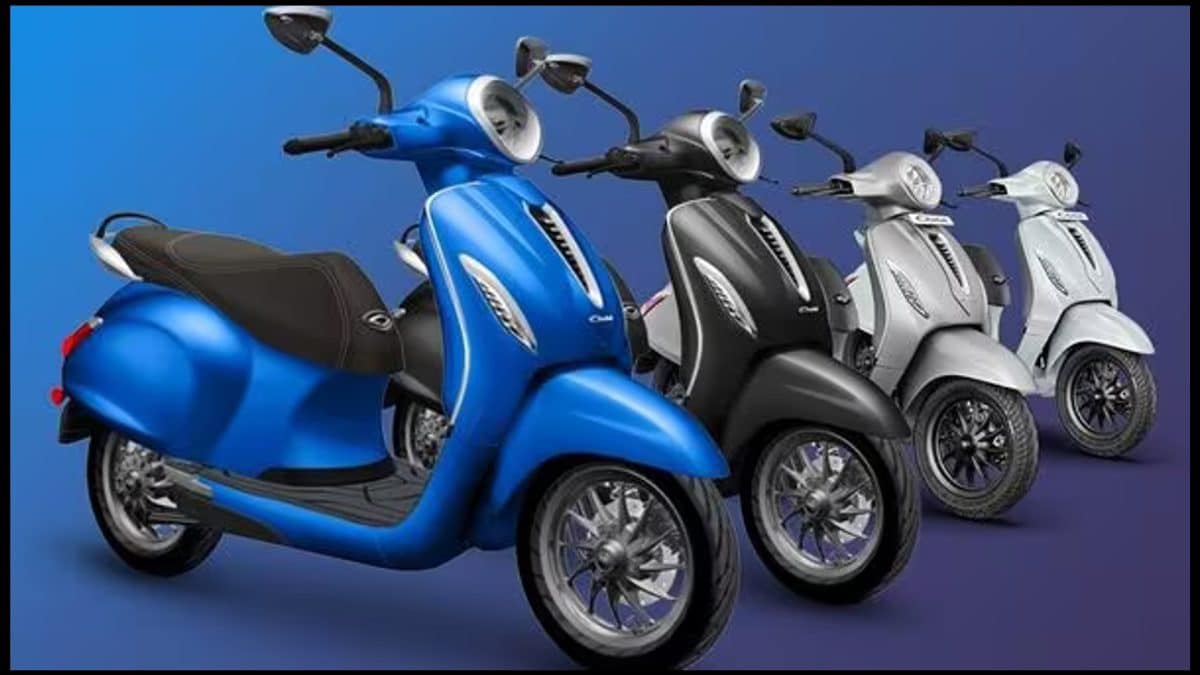
Bajaj Auto delivered a weak global sales performance in 2025, with annual registrations declining 3.4% year on year to approximately 3 million units, as a sharp 7.8% drop in domestic volumes more than offset growth in international markets.
McD tracks new vehicle registrations across 97+ countries worldwide, reporting data based on the calendar year. When comparing the data reported by us to that declared by manufacturers, it’s important to note that manufacturers typically report their “sales” (vehicles invoiced), which often differ from “registrations” due to variations in their fiscal year reporting.
Global Sales Performance
Bajaj Auto is one of the largest motorcycle manufacturers in the world and the global leader in the three-wheeler (tuk-tuk) segment, although this analysis focuses exclusively on its two-wheeler business.
The past year was not particularly memorable for the company, which was the only major Indian two-wheeler manufacturer to report a decline in sales volumes. Annual registrations totaled around 3 million units, down 3.4% year on year, mainly due to a weak domestic performance, with volumes falling 7.8%.
In contrast, international sales expanded by 8%, increasing their share of total volumes for the third consecutive year to 31%. This confirms Bajaj Auto as the strongest Indian OEM in international markets, supported by its extensive presence in Africa and Latin America.
As a result, Bajaj Auto currently ranks as the sixth-largest two-wheeler manufacturer globally.
However, the most significant development of the year was the acquisition of a majority stake in the KTM Group. Management is now focused on restructuring the Austrian company and integrating production and procurement activities, having confirmed Gottfried Neumeister as CEO for the 2026–2028 period.
2026 Company’s Goals
Beyond the restructuring of the KTM Group, Bajaj Auto’s main objective in 2026 will be to regain market share in the domestic market. To achieve this, management has outlined a robust strategy that includes the launch of a new 125cc commuter motorcycle, the introduction of three new variants of the popular Pulsar range, and a redesign of the Dominar.
A far more challenging task will be the expansion of the business in Western Europe, where the company began operations last year. Unlike Chinese competitors, which are rapidly gaining market share across Europe, and Royal Enfield, which has already established itself as a strong player on the continent, Bajaj Auto currently lacks a product portfolio capable of appealing to Europe’s more sophisticated consumers. As a result, building a profitable and sustainable business in the region appears difficult.
